
Wieda
Green Idyll in the South Harz
The small town of Wieda is truly remarkable: stretching about 4.4 kilometers, it winds its way through the valley, making it one of the longest continuous settlements in northern Germany. The highest peak in the southern Harz Mountains, the Stöberhai, also rises near Wieda, reaching a height of 720 meters.
A stroll through the village is quite a workout, as this linear village is situated at elevations ranging from 340 to 460 meters. Aside from these amusing numerical quirks, Wieda offers one thing above all else: lush greenery, blooming mountain meadows, and fragrant mixed and deciduous forests—a true vacation idyll.
Ramble through the local history
Wieda was first mentioned in 1243 as a possession of the Cistercian monastery. Initially, this consisted of areas with mountain meadows, a stream, and simple shelters or overnight lodgings for the monks who cultivated this land. The town of Wieda itself did not emerge as a traditional settlement until the 16th century.
In addition to agriculture, mining soon began in the Kastental Valley, and the extracted ores were smelted in Wieda, which also led to the development of charcoal production. Incidentally, in 1875, the iron smelter became Wiedaer Hütte AG, which made a name for itself as a stove manufacturer and remained in production until 1972.
But before that, in the 17th century, another industry provided livelihoods and employment: glassmaking. Wieda’s specialty: a colored glass that, thanks to its variety and quality, garnered widespread attention far beyond the region’s borders.
You can find a vivid account of this fascinating history of development at the Glass and Metallurgy Museum in Wieda.
It buzzes and hums in Wieda
How does beekeeping work, which plants are good for bees, and how do beekeepers harvest honey? You’ll find the answers to these questions on the Bee Education Trail, built in 2017 and dedicated entirely to agriculture’s most important helpers. Along the way, tables and benches invite you to enjoy a picnic in the great outdoors. Enjoy the view, the open spaces, and beautiful moments with family and friends in nature.
The Bee Nature Trail is doubly worthwhile, as it leads over the Käseberg and past the bell tower. Don’t be surprised—the church that belongs to it is located down in the village. This unique feature makes the yellow tower, visible from afar, a landmark of Wieda.
Interesting fact: The area around the bell tower, known as Ruhm, was once the vineyard of the Walkenried monks. The first church was built in 1607 because the prayer room that had been used until then was no longer large enough to accommodate the many newly settled glassmakers.
By bike or on foot through nature
Wieda is an ideal starting point for your hikes and mountain bike tours. Many beautiful routes intersect here, such as the SHE Cycling Trail to Braunlage or the South Harz Railway Cycling and Hiking Trail. The latter also takes you on a journey through the region’s eventful history.
Don’t be surprised if your walks through nature are accompanied by the sound of bells. The “Harzer Rotes Höhenvieh,” the traditional cattle breed of the Harz Mountains, grazes on many mountain meadows around Wieda.
If you prefer a more active way to explore on foot, you can roam the countryside around Wieda along the Nordic walking trails or climb the 771-meter-high Stöberhai, also known as the “Brocken of the Southern Harz.”
In the end, all nature and animal lovers gather at the restaurant in the former Stöberhai train station. Not only are hungry explorers treated to a meal here, but the wild inhabitants of the forest also receive their daily ration at dusk. Look forward to seeing wild boars, foxes, and deer—and with a little luck, the kings of the forest, the red deer, might even stop by.
Tip: Use HATIX for free rides on the Harz public buses.
Event Highlight
IN THE FALL | When it comes to partying, Wieda is also in a league of its own: With “Spelle varn Schwelle,” , one of the oldest and largest traditional Harz festivals takes place in town. The name means “Chatting on the Doorstep” and vividly describes the evening chats neighbors used to have in the past. In keeping with the theme, the traditional Harz specialty “Kniester” is served—fresh sausage accompanied by unpeeled roasted potatoes seasoned with or without caraway seeds. Numerous artisans and musicians round out this convivial festival.
Event Highlight
IN WINTER | Every year during Advent, Wieda is transformed into a atmospheric, brightly lit nativity village. Marvel at life-size nativity scenes, a long row of Christmas trees, and numerous light installations. Wieda is the ideal place to escape the hustle and bustle of the city during the Christmas season. On all four Advent weekends, , concerts, readings, and other events create a contemplative atmosphere. A short trip to Wieda is the perfect way to kick off the Christmas season in a relaxed way!
The other districts of the municipality of Walkenried
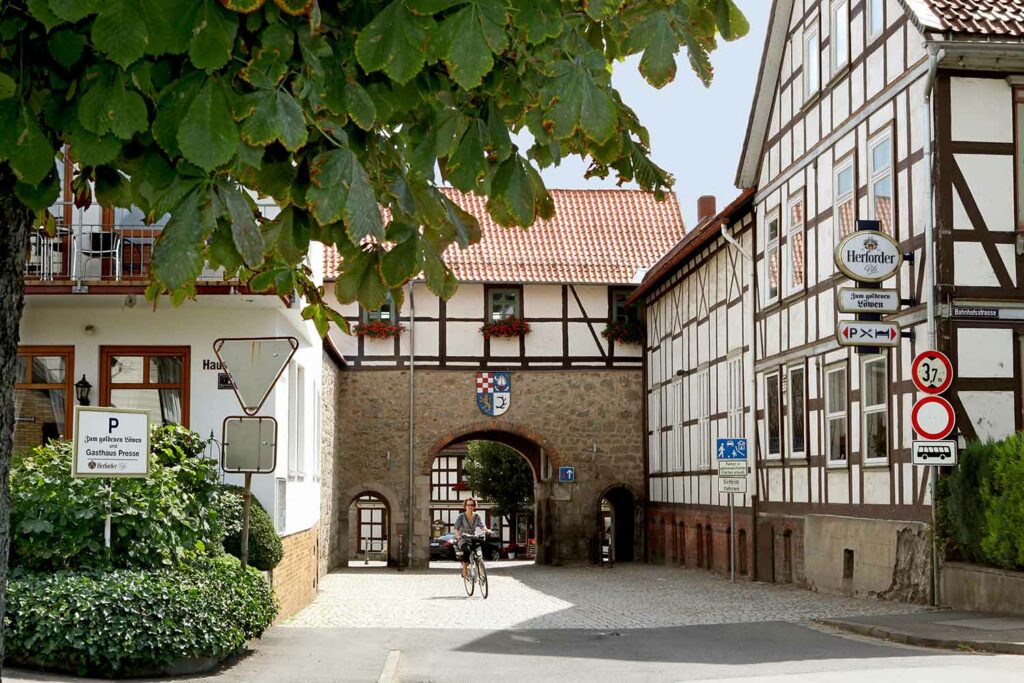
Walkenried
The monastery town of Walkenried is known for its Cistercian monastery and UNESCO World Heritage Site, which attracts numerous culture-loving visitors each year. Nestled in the Harz forests, Walkenried offers recreational activities for young and old alike.
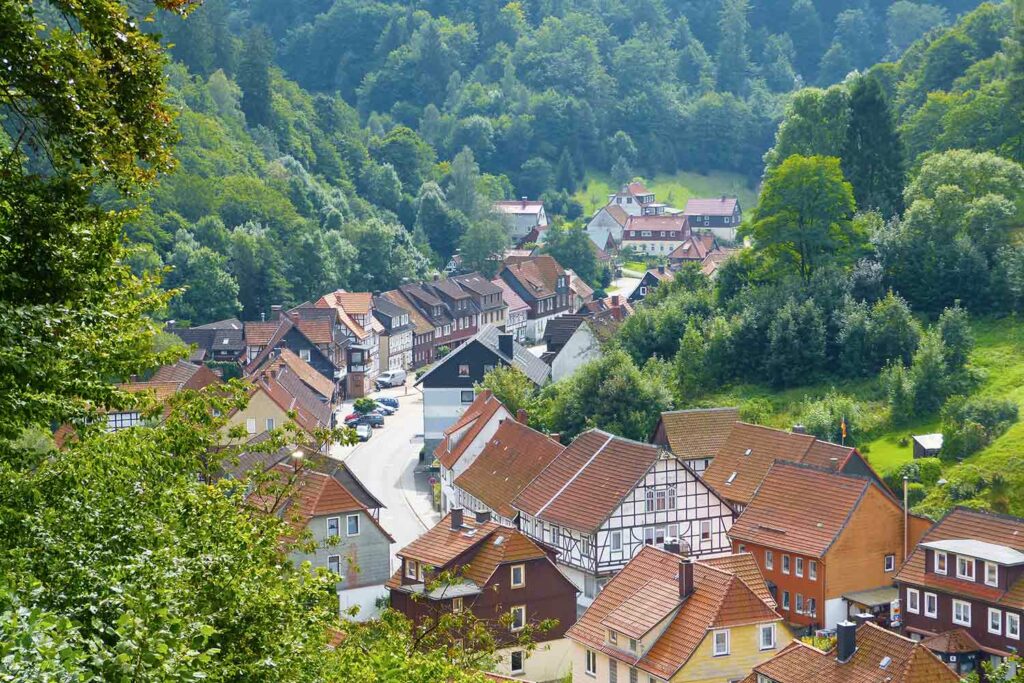
Zorge
Take a deep breath in the health resort of Zorge: crisp forest air, mountainous scenery, and dense forests are perfect for relaxing getaways in nature. Lush and green in summer, glistening white in winter—Zorge is worth a visit any time of year.

